Thursday, February 25, 2010

Does Power Corrupt? How or How Not? Why or Why Not?

Everyone wants to get to the top, to be in charge, to rule the country. The questions what lengths will people go to get there. Who will they betray? What will be the consequences of their actions? People will be lie, cheat, and steal to get to that position of power, and then lie, cheat, and steal when they are knocked down from that power. Power corrupts in almost all situations, and it is simply because the people’s will and want to be powerful above all other things. A great example is Alcibiades and his sudden drop from power.
He was a general of Athens, and it was his idea to send naval fleets to Sicily, Italy during the Peloponnesian war between Sparta and Athens. Sicily is where the Spartans were staying with allies. The expedition was called the Sicilian Expedition, and the plan deemed flawless. The night before the expedition was set to take place, a huge act of vandalism occurred in the city. Alcibiades’s enemies within city walls told the people it was an act done by him and sure enough, the city believed the enemies and refused to launch the expedition. In a fit of rage, he traveled to Sicily and warned the Spartans of the attack. When the expedition finally launched and arrived, the Spartans were armed and ready. The sudden shock of not being in power hit Alcibiades so hard that he even betrayed his own empire, causing them to lose a battle. (http://www.san.beck.org/Alcibiades.html)
While with the Spartan Empire, though, he soon grew more and more powerful being the man that saved the Spartans by betraying his own. There, he eventually grew dangerous enemies forcing him back into Athens. His Athenian enemies were at him again, and it seemed Alcibiades had enemies wherever he went. This was all because of one reason; his love and desire for power. He was willing to give whatever he had just to be in control. (http://www.san.beck.org/Alcibiades.html)
Today in modern politics you hear so many stories of lying, betrayal, and cheating. Modern politics differ from those in Greek Age in which that not only are politicians striving for power, they want money. The government today could be described as corrupt by some citizens around the country. (http://www.thirdworldtraveler.com/Political_Corruption/Money_Culture_CAP.html)
Those who possess power in this country seem to think they can get away with anything just because of the power and money. One very popular scandal is the one involving John Edwards and his mistress that he had while still married to his wife. Politics is full of married men with mistresses. Think of Bill Clinton and the episode of him cheating on wife, Hillary. To clarify my point of bringing up sex scandals in an article dealing with the corruption of power, not only do people do whatever they can to become powerful, they think they can do anything while holding that position of power. (http://inform.com/politics/political-scandals)
Even teenagers want to hold some sort of power. On sports teams, players fight for the captains spots. Some will betray teammates to get to that spot, then overrules and takes anger towards those who don’t follow what the captain is instructing. It can also be seen in your typical friend telling another friend not be friends with certain people. That person wants to hold a special power over another, and will lie to other people in order to hold that power. He or she may lie about what they have done to be liked by more people. They can cheat, steal, or drink just to feel powerful.
The want to control and possess power is a deadly thing.


"ALCIBIADES by Plato." Literary Works of Sanderson Beck. Web. 26 Feb. 2010. .

"Political Corruption The Corruption of American Politics: The Money Culture." Third World Traveler, third world, United States foreign policy, alternative media, travel. Web. 26 Feb. 2010.
"Political Scandals - Inform." Inform - Curated news from around the web. Web. 26 Feb. 2010. .

What compels someone to lead others?

The compelling force to lead others comes from a dominant personality. It can come from the way someone is raised, and by the personalities of those who surround them. In Alexander the Great's case, what compelled him to lead his army in overtaking more empires was driven from the need to win over the population of his conquered empire. He wanted to have the population behind him, which compelled him to lead his army to conquer the enemy empire. It is mostly personality, and the way a person acts.


Alexander the Great Fans. Web. 25 Feb. 2010.

Wednesday, February 24, 2010

Athena: Patron of Athens

Athens and Sparta Notes

480 BC - Sparta and Athens came together to fight the Persians
  • sparta challenged the athens, they ended up going to war.
  • they battled on the planes of atica (sp?)
  • neither side is defeating the others.
  • athenians built long walls from harbor to city
  • no enemy can get to you without going along the walls
  • Spartans force athenians into walls, shut the gate and they're trapped
  • the plague breaks out
  • Sparta had allies in cicily
  • alcibiades creates the plan to attack cicily using the athenian navy, very well liked, popular
  • night before ships were supposed to attack someone commited mass vandalism, and oltical enemies conviced people that is was him
  • Alcibiades went to Sparta, think he told Sparta they were coming
  • Alexander was tutored by aristotle
  • Philip - king of Mecedon is alexanders dad
  • becomes king after philip dies when he is nineteen
  • Alexander decides to take revenge on the persias, invades and conquors it
  • In the next few years, he ruled most of the known world
  • Alexander goes to Troy so he could say he conquered Persia Started in troy to conquer persia
  • Egyptians hail him as a king becuase he pulled undid a knot in a legend
  • Egyptians HATE persians
  • Alexander is now considered the son of gods
  • Persepolis - ancient capital of persia
  • Battle of Issus - http://en.wikipedia.org/wiki/File:Battle_issus_initial.gif
  • Darius gave Alexander the Persian Empire
  • Went after guy that left Darius for dead so he could get the population behind him
  • Alexander's men had to build roads and bridges
  • over 100,000 people in his army
  • He continues toward India
  • meets fierce resistance, constant fighting
  • in babylon, he loses a friend and becomes depressed - becomes very ill and dies, not in a place of glory but becomes sick. he was 32 years old
  • Split all land between each of the generals
  • Selucid Empire - eastern part of Alexander's Empire
  • ptolemeic Egypt came under the rule of ptolemaic
  • Hellenistic Age - refers to greece and the whole empire alexander conquered

Tuesday, February 23, 2010

HELP WANTED!

I helped Olivia DiFonso with her Ancient vs. Modern Olympics Article. For this article, I wrote a few paragraphs the modern Olympics and the qualifications for it. Also, I wrote about a few sports that took place then.

What elements of the Roman Republican political and legal system appear present in the systems of modern democracies?


The elements of the Roman Republic political system has that modern democracies still have are the divisions of councils and legislatures. Also, the Roman political system has a senate, just like the United States democracy today. The senate's authority was taken from the esteem and prestige of the state. The Roman political system's legislature has two assemblies, and so does the American Democracy which is the House of Representatives and the Senate.


"Republican Roman Government." The University of Texas at Austin - Web Central. Web. 24 Feb. 2010. .

Monday, February 22, 2010

Biographies

Socrates - He was a philosopher from Greece. He is a large contributer to the field of eithics. Socrates lived from 469 BC to 399 BC. He forever changed how philosophy was to be concieved, and rarely wrote anything down.


Plato - Plato lived 427 BC to 347 BC in Greece. As well as Socrates, he was a classical Greek philosopher. He was one of Socrates most famous students, and after the death of Socrates, Plato carried on much of Socrates work and eventually opened his own school. It turned out to be the most famous school in the classical world.


Aristotle - He was the most famous pupil to attend the school founded by Plato. Aristotle was a Greek philosopher from 384 BC to 322 BC in Greece. He taught Alexander the Great, and is considered one of the important founding figures in Western philosopher.

"Socrates ()." Stanford Encyclopedia of Philosophy. Web. 22 Feb. 2010. .
"Greek Philosophy: Plato." Washington State University - Pullman, Washington. Web. 22 Feb. 2010. .
"Aristotle." UCMP - University of California Museum of Paleontology. Web. 23 Feb. 2010. .

Friday, February 19, 2010

Is History Created by 'the People' or by Individuals?


History is not created by just one individual, or just by ‘the people’. Think of previous of current history courses you have taken. You may have studied individual kings and queens, rulers, or inventors, or maybe you studied empires and civilizations as a whole. Either way, both topics have created history and are studied in classrooms today. It is safe to say that individuals make up ‘the people’. It could also be argued that ‘the people’ and individuals are the same thing. Individuals make up the people, but some rise over others to have more control and to become more powerful. Regardless who makes up the history, it is still studied in classrooms today all around the world.
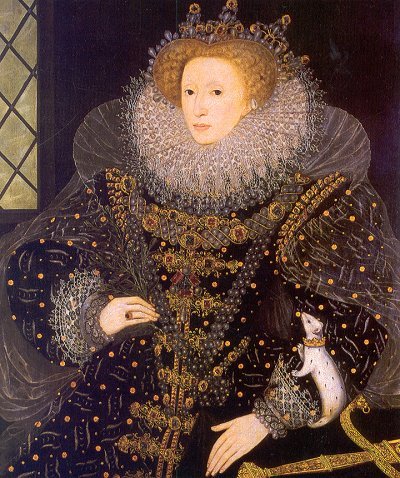
Queen Elizabeth, for example, created a huge part of English history as an individual. She was the daughter of King Henry VIII, and her reign was referred to as the Golden Age. Born in 1533, she was one of the most admired rulers of all time. It was very rare that she never married, and never had children to success her. Elizabeth reigned for 44 years, and was the best thing to happen to England. (http://www.elizabethi.org/us/) The Golden Age lasted from 1558 to 1604 and was the height of the English Renaissance and English literature. Without her rule, the country would not have blossomed like this, and history of the Gold Age would have never been created. It was because of Queen Elizabeth, an individual, that such a critical part of history can been studied. and he even has his own holiday which is the third Monday of January each year. King was a major supporter in the African American civil rights movement He was the youngest person to receive the Nobel Peace Prize in 1964 for all the work he did. The most famous speech he delivered was “I Have a (Wikipedia, The Free Encyclopedia)
Another single individual that is more recent to our history is Martin Luther King Jr. He was a Baptist reverend who fought long and hard for the rights of African Americans and to end discrimination. He, again, was an individual who created a part of history, Dream” in 1963. Without him, African Americans would still be separated at schools, restaurants, water fountains, stores, as well as many other public places. He was a legend in American History as an individual. (http://en.wikipedia.org/wiki/Martin_Luther_King,_Jr.)
As an individual, Julius Caesar played a huge role in the transition of the Roman Republic to the Roman Empire. He was a very important Military and Political Leader. After he took control of the Empire, he took vast measures to change and reform the Roman Society and government. The Roman Empire is studied by almost all students, and without Julius Caesar, there would be no history of Roman Empire. Julius Caesar did not come from a family a much power, so his reign and takeover was done much on his own. (http://en.wikipedia.org/wiki/Julius_Caesar)
An example of history that is created by ‘the people’ is the Battle of Thermopylae. Without this battle fought by the people, European history would not have happened. This battle was fought between Sparta, military of Greek city-states, and the Persians. Every single Greek died in this battle, but it gave the city of Athens enough time to abandon the city and clear out before the Persians arrived. The Persians were then called out the island of Salamis, and Sparta and the Greeks were fully prepared. Spartans ended up destroying the Persians, and those who survived were barely able to make it home. This battle ended the ongoing Persian Invasion. If this battle had not been fought, the Greek Empire could have collapsed, and the Persian Empire would have taken over. (http://en.wikipedia.org/wiki/Battle_of_Thermopylae)
Another example of history ‘the people’ have created is a more recent occurrence which is the Attack on Pearl Harbor. It was the very day the America joined World War II. This is an event created by ‘the people’ because they are the ones who dropped bombs onto the naval base in Pearl Harbor, and ‘the people’ responded to it by entering the war and fighting back. The Attack on Pearl Harbor occurred in 1941 on the morning of December 7. Four U.S. Navy Battleships were sunk during the attack, and 2,402 people were killed. It is said that this event was a declaration of the war. Had this not happened, the United States could have stayed out of the war, having no American history in the war. This is a huge event in American history, and will forever be remembered. Oddly enough, after the war was over America became allies with Japan, securing their backup for any future altercations with other countries, as well as us giving support to their country. (http://en.wikipedia.org/wiki/Attack_on_Pearl_Harbor)\
The plane, United Airlines Flight 93’s events occurred strictly on the people aboard that plane. The plane was intentionally going to crash into Washington D.C. The passengers stopped the crash into D.C. by taking over the cockpit, and crashing into a field into Pennsylvania. Those passengers saved lives by the courageous actions they took. Without them, history could be full of events that were a result of the crash of Unite Airlines Flight 93 into the capital. (http://en.wikipedia.org/wiki/United_Airlines_Flight_93)
‘The people’ and individuals create most, if not all history in the world. Single individuals can be held responsible for events, while whole societies or groups of people can be held accountable for the event. As argued before, ‘the people’ can be made up of individuals. The only difference would be that the event occurred because of a group as a whole making something happen out of it, not just one person. History is constantly being created, and whether or not it’s by one or more people, it will be in textbooks to be studied hundreds of years later. The question is up to you to decide.


Wikipedia contributors. "Golden Age." Wikipedia, The Free Encyclopedia. Wikipedia, The Free Encyclopedia, 12 Feb. 2010. Web. 19 Feb. 2010

Wikipedia contributors. "Martin Luther King, Jr.." Wikipedia, The Free Encyclopedia. Wikipedia, The Free Encyclopedia, 18 Feb. 2010. Web. 19 Feb. 2010

Wikipedia contributors. "Julius Caesar." Wikipedia, The Free Encyclopedia. Wikipedia, The Free Encyclopedia, 17 Feb. 2010. Web. 19 Feb. 2010.

Wikipedia contributors. "Battle of Thermopylae." Wikipedia, The Free Encyclopedia. Wikipedia, The Free Encyclopedia, 18 Feb. 2010. Web. 19 Feb. 2010.

Wikipedia contributors. "Attack on Pearl Harbor." Wikipedia, The Free Encyclopedia. Wikipedia, The Free Encyclopedia, 11 Feb. 2010. Web. 19 Feb. 2010.

Wikipedia contributors. "United Airlines Flight 93." Wikipedia, The Free Encyclopedia. Wikipedia, The Free Encyclopedia, 18 Feb. 2010. Web. 19 Feb. 2010.

"Martin Luther King - Biography." Nobelprize.org. Web. 19 Feb. 2010. .

Queen Elizabeth I (1533-1603). Web. 18 Feb. 2010. .

Wednesday, February 17, 2010

Was Athens a 'Democracy'?

Yes, Athens was a democracy. Other surrounding cities tried to follow in the path of Athens, but none were as powerful, stable, or as well documented. It was an experiment of direct democracy where the citizens voted on legislation. Many later studies that people have performed are fascinated by it. Voting had nothing to do on an economic class, and the number of participants was outstanding.

Wikipedia contributors. "Athenian democracy." Wikipedia, The Free Encyclopedia. Wikipedia, The Free Encyclopedia, 12 Feb. 2010. Web. 18 Feb. 2010.

"Athens - Ancient Athens." The Redirector. Web. 18 Feb. 2010. .

The Ancient Olympics Compared to the Modern Olympics


The ancient Olympics was first started in 776 BC in Olympia. Unlike now, the Games were simply a way to get fit. Now, it is a competition to see who is better at one sport then others. Also, today the Olympics have athletes from all over the world. In ancient times, it was just in one specific area. The events that take place during the race are completely different today then they were thousands of years ago. Another difference is today, the Olympics are divided into winter and summer Olympics. Back then, it was one specified Olympics which had events such as boxing, wrestling, long distance running races, horse and chariot races, as well as one compiled event. The Olympics today have events such as track, skiing, snowboarding, wrestling, and soccer.


"BBC - History - Ancient History in depth: The Olympics: Ancient versus Modern." Ow.ly - Shorten urls, share files and track visits - Owly. Web. 17 Feb. 2010. .

"Home." Web. 17 Feb. 2010. .

Thursday, February 4, 2010

Baltimore Monuments

One example a Baltimore monument that outsiders would not understand is the Baltimore Washington Monument. It was built it honor of George Washington and is made out of limestone. Another monument is the Star Spangled Banner Flag House. It was the house in which the flag that was flown over Fort McHenry sewn.


The Washington Monument:


The Star Spangled Banner Flag House:


"File:Flag House, 844 East Pratt & Albemarle Streets (Baltimore, Independent City, Maryland).jpg -." Wikipedia, the free encyclopedia. Web. 05 Feb. 2010. .

What is Important?

You could name countless things considered important. The question is, how many other people is it important too? There are some things people would consider important to everyone. In other words, we wouldn’t be where we are today without them. I’m talking about the first forms of writing, pyramids, Egyptian life, the Nile River, the beginning of humans and the human instinct to dominate over another, the discovery of electricity, modern day medicines, the list goes on. All of these things have impacted human life in one way or another, and could all be considered “important”.

The first form of writing was hieroglyphics. It was used by the Egyptians, and the first sentence written in hieroglyphics was found in a tomb in Egypt. They are not pictographs, but more so each symbol represents a sound, like letters in the English alphabet. For example, a picture of an eye would not represent the letter “I” or mean the word eye. It would stand for a sound. Hieroglyphics are written on papaya, wood, or carved into stones. (http://en.wikipedia.org/wiki/Egyptian_hieroglyphs) The reason Hieroglyphics is so important is because it sparked a new generation of communication. Writing is one very essential part of everyday life today, and there would be a major lack of communication without it. The Egyptians opened a new door that would help the evolution for the rest of civilization. (http://www.eyelid.co.uk/hiero1.htm)

Pyramids are a major factor of Egyptian life. They were used as burial tombs for the Pharaohs and the royal family. It is said that after death, the bodies were mummified and objects were carved into the walls of the tomb to keep the soul occupied until final judgment. It was incredibly important to keep the pyramids sealed so the soul would have a place to “hang out”. The pyramids were used almost as a gravestone while also as a tomb. Without the pyramids, it is said that the souls would wonder, and not be able to stay with the body for final judgment. (http://en.wikipedia.org/wiki/Egyptian_pyramids)

The Egyptian Pharaoh Akhenaten was the first believer on Monotheism. Monotheism is the belief of one divine being, or one god. This belief is important for Christians because we believe in one God, and all other saints are not on the same level as God Himself. (http://en.wikipedia.org/wiki/Monotheism) All Pharaohs of Egypt were not originally called pharaohs by the ancient Egyptians; they were considered the Kings of Egypt. Most pharaohs were born into the position, with royal families. They were important to the people of Egypt just like any other ruler is important to its country. They kept it in order, and maintained a stable level of rule throughout the country. (http://www.touregypt.net/kings.htm) Without them, the civilization could have collapsed, and been unable to rebuild itself back up.

The Nile River that ran through Egypt is single handedly the main geographic source that fueled the growth of the Egyptian Empire. It is the longest river in the world. Almost all cites are along the river, and barely any life is in the desert. The water from the river has fertilized crops for food to be grown, as well as given water for the people to drink. It also is a main source of transportation. The Nile River is probably the most important resource for the Egyptians. Egypt is said to “have the gift of the Nile”. The civilization is dependent on this river, and annual flooding of the Nile every year. Without it, the soil will not be fertilized and the crops will not grow, thus resulting in a major shortage of food that year. (http://www.touregypt.net/kings.htm)

The evolution of the human being is hands down the most important thing to happen to the human race. Without, humans would not be here today. Studies say that apes evolved into humans. Also, the instinct of one race to be dominant over the other caused the revolution. (http://en.wikipedia.org/wiki/Human_evolution) The apes natural instinct to be a dominate force helped them to make early discoveries such as bones used as weapons. Also, when something new is thrown into the society, the civilization came together to form and grow. Without the complex evolution, you and I would not be here this day.

Electricity is one very important recent discovery. It was discovered by Benjamin Franklin with a kite and a key during a lightning storm. Electricity today is the basis of so many items that we use. (http://en.wikipedia.org/wiki/Electricity) From the simple light bulb, to the television in your family room, electricity is everywhere. It is an important aspect to everyday life. So much is relied on it today, that if it was suddenly taken away, huge adjustments would have to be made in order to just get by every day. This discovery is even going so far as to making electric cars. Those would be very important for the environment.

Modern day medicines are such an important part so a person’s everyday health. Years ago the common cold could be a deathly, contagious disease. Today, you can one pill and be on your way, the symptoms being relieved in a few hours. It has even expanded to invasive heart surgeries, and treatments that defy human odds. It is so important at how much longer people are living, and how face they are getting better, and receiving treatments, surgeries, medicines, and transplants. It’s amazing what can be done to save a life.

The word “important” will and can be used by different people, for different reasons. The reasons listed above are things that aren’t important to just one single individual, but a whole race, better yet whole species, and affects their way of living. It brings the human race together as one, knowing they can all rely on the same things to say that is how they got to where they are today. It brings us together as a whole, and we can only look forward to what the future has to bring and what we will discover that the future will rely on as “important.”


Works Cited
"Egyptian hieroglyphs -." Wikipedia, the free encyclopedia. Web. 04 Feb. 2010. .
"Egyptian Kings (Pharaohs)." Egypt Travel, Tours, Vacations, Ancient Egypt from Tour Egypt. Web. 04 Feb. 2010. .
"Egyptian Kings (Pharaohs)." Egypt Travel, Tours, Vacations, Ancient Egypt from Tour Egypt. Web. 05 Feb. 2010. .
"Egyptian pyramids -." Wikipedia, the free encyclopedia. Web. 04 Feb. 2010. .
"Electricity -." Wikipedia, the free encyclopedia. Web. 05 Feb. 2010. .
"File:All Gizah Pyramids.jpg -." Wikimedia Commons. Web. 04 Feb. 2010. .
"File:Ben Franklin painting print.jpg -." Wikimedia Commons. Web. 04 Feb. 2010. .
"Hieroglyphics ancient Egyptian writing and alphabet translator write your name." Egypt Pyramids Pharaohs Hieroglyphs - Mark Millmore's Ancient Egypt. Web. 05 Feb. 2010. .
"Human evolution -." Wikipedia, the free encyclopedia. Web. 04 Feb. 2010. .
"Monotheism -." Wikipedia, the free encyclopedia. Web. 04 Feb. 2010. .


"BBC - History - Ancient History in depth: Building the Great Pyramid." BBC - Homepage. Web. 04 Feb. 2010. .

Is war considered technology? Why or Why not?

War is considered technology. Technology is defined as "anything that is creation that deals with creation and the use of technical means"(http://dictionary.reference.com/browse/technology). Think back to the French and Indian War*. The French were using muskets and knives to fight, while the Indians were merely using bow and arrow. Now compare that to the nuclear bombs that have been made today, as well as the computer sciences used to fight. All creations of war is considered technology, as well as war sparking the creation of new technology, such as different ways to grow crops because war has forced family to move. Also, new weapons as a result of new ways to protect yourself. Technology is all around us, and war is just another example of new technology constantly being created.


*More information on the French-Indian War can be found at http://en.wikipedia.org/wiki/French_and_Indian_War

"File:Benjamin West 005.jpg -." Wikimedia Commons. Web. 04 Feb. 2010. .

Megaliths and War

megaliths - big stones
big monments to serve to people who have died, and also burial chambers.
menhir - large upstanding stone.
stonehedge, sight on salisbury plain in England.

Notes 2/4/10 Egypt

(wiki saved to delicious)
speak comptic. coptic church in Egypt
Most people in coutry live along the nile rive
not much life in western egypt in the sahara
pharroh had to make the river flood each year - it fertilizes the crops
mastaba - a stepped pyramid, looks like a layer cake, each step is a layer.
The feather the heart was weighed against was a Matt
Die, Ka goes to find it's fate.
onk symbol of eternal life.


What is the oldest human-created artifact that has mattered to you? Why/how does it matter?


The oldest human created artifact that has mattered most to me is the cell phone. It makes everything so much easier. If I need to call someone thousands of miles away, it can be done. Now, you can text which is like sending a message to someone cell phone immediately. I find that amazing that I can communicate with anyone around the world while I'm in one location. Also, it makes communication with parents and friends easier. I can call my parents whenever I need help, or to let them know what is going on. I can make plans easily with my friends in the click of a button. Cell phones just make things easier, period.


"File:Japanese-cellphone-open-2008.jpg -." Wikimedia Commons. Web. 04 Feb. 2010. .

Wednesday, February 3, 2010

Notes - 2/3/10

Egypt was split into upper and lower egypt
nile - longest river in the world. flows north into the mediteranian sea.
the pharroh has the ultimate domination over every single indivudual in Egypt.
never find space between the legs in egyption sculptures
glyphs - carved in stone typically. Each character represents a sound in the language
not pictograms
the pyramids - only for the burial of th Pharroh and his royal family.
mortuary cities. cities made for the purpose of the burial of the pharrohs.
The used slave to take care of them, and to build them. Also, worked the farms while others built the pyramid.
Enormous slave population
egyptians - ka was there God. when you died, it was released and would "hang out" in the pyramidjudgement - two books, both are preoccupied with death.
weighed the heart against a feather.