Thursday, May 20, 2010

Michelangelo

Tuesday, May 18, 2010

Give a brief history of Scotland from the 14th through 16th centuries


In the 1300's, the last great battle for independence took place. It was called the Battle of Bannockburn, and in this Battle the Scottish won their independence. In the next hundred years, Scotland suffered from weak kings and noblemen. The rulers of these two centuries were Robert I, David II, Robert II, Robert III, James I, James II, James III, James IV, James V, Mary I, and James VI. During this time, the Protestant reformation was sweeping through Europe, hitting Scotland hard. In the 1500's, all nationals of Scotland also became nationals of France and vice versa. This did not change until the twentieth century.


"The Declaration of Arbroath: English." Web. 18 May 2010.

http://www.geo.ed.ac.uk/home/scotland/arbroath_english.html

Friday, May 14, 2010

Movie

Martin Luther: Germany 1483, a time of desolation and disease
the plague could wipe out entire towns in days
there was one consolation. the church and its promise of heaven
it was the most powerful institution on earth. mightier than kings and wealthy.
It would be overturned by Martin Luther
He brought about the idea we should stand up for what we believe in
One of the greatest emancipator in human history.
There has no one in the 1000 years that has been hated as much as me
He would one day challenge the supremacy of the catholic church
grew up in northern Germany
the church was the center of luther's childhood world
it inserted itself into the legal system
luther embraced the church at first, being an alterboy and singing in the choir
he was determined for his son to become a lawyer
memories of being punished by his father
he hated his father
the fear of punishment of failing drove him to spectacular revenge
luther first followed the path layed out for him
there were 14 different religious orders in the town of his university
all the certainties of luthers life were shattered in 1355 by the plague
they though God was punishing them for their sins
he was caught in a massive thunderstorm, but it struck him to his very soul, and he vowed to become a monk
he took charge of his own life for a moment.. he was a person of spiritual sensibilities
your life was regularly moderated in a monastery
the only way of achieving salvation was cutting off from the community
the church outrages and disgusted Luther
they tried to imitate the sufferings of christ
he claims the monastaries permentantly ruined his health.
luther did everything 110%
he became afraid he was never going to be good enough for god
in 1510 he was offered an escape from his life
the capitol of Christendom period
it took him two months to make the long journey south
he arrived in rome just as the Renaissance was reaching its height
everything was different for him
fees were charged for everything
it has a bureaucracy and palaces, they even had a military power
he timidly tried to preach a mass, and he was rushed and ridiculed by the other priest
for a fee he was allowed to enter the crip of the church
he was overtaken by a fear.. "could all this really bring him closer to God?"
he didnt think rome reflected Christianity as he understood it, he had to find an answer in some other way
he spent the rest of his days in penence
confessing gave him no relief
he had a conscience full of guilt. he hated this God


Thursday, May 13, 2010

Is monarchy more or less effective than democracy?

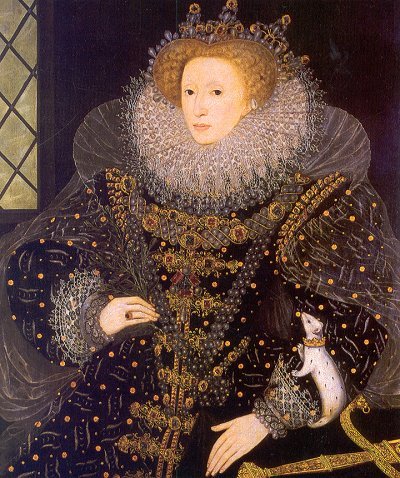
To look back at an example of a monarchy, the Elizabethan Age could tell it all. Today’s society is all about the democracy. The question is, which is more effective? A monarchy is defined as “supreme power or sovereignty held by a single person” (dictionary.com). In the 16th century, Elizabeth and the Tudor Succession had this sole power. In other words it was a king or queen. Democracy is defines as “government by the people” (dictionary.com). In other words, what the American government is ruled by. This American government of a democracy is much more effective than that of the government ruled by Queen Elizabeth and the Tudor family.
The Elizabethan Age was called that under the rule of Queen Elizabeth from 1558-1604. It was said she had a short temper, and often had to cool herself down by taking a walk. The monarchy she ruled had her as ultimate power. She made all decisions for England and was not afraid of the responsibilities. Like most monarchies that had both a King and Queen, Elizabeth did not want to marry. She told parliament that, "I have already joined myself in marriage to a husband, namely the kingdom of England”. This meant that she did not need a husband to rule over the country, and she would devote herself entirely to her work. The problem with a monarchy is that the people do not have a choice who rules. A monarchy’s power is changed from generation to generation by family members. In most cases, if civilians did not like the King or Queen, they would attempt to overrule.
The government of America today’s society is democracy. In a democracy, citizens vote for the president, and other government officials. They control most of the decisions made when he comes to who holds the most power. Also, the power of the president can be overruled by other branches in the government. This is a much safer, more effective way of making decisions than in the monarchy. The United States has had 44 presidents, citizens voting for a majority of them. The current US president said about becoming president and about what he was going to say to America, “I think that the main task for me in an inauguration speech, and I think this is true for my presidency generally, is to try to capture as best I can the moment that we are in.” Under the presidency of a democracy, we have peacekeepers in almost all countries, put a man on the moon, and bring the United States out of a depression in the 1920’s.
Democracy compared to a monarchy has much more positives too it. The best part of the democracy is the constitution. It keeps laws and orders in line, and does not allow the president to have too much power. For example, in the reign of Mary, Elizabeth’s half sister, she wanted Catholicism to be the only religion practiced in England. Because of this desire, she burned people at the stake if they weren’t Catholics. Most were tried as witches and then burned. With a democratic government, the President would not have the power to do such that. The other branches of the government would overrule this attempt. America also has the justice system and a military to keep things in line along with the constitution. This peaceful law system is much more effective in keeping rule and power, as well as keeping the people happy and safe.


The New York Times - Breaking News, World News & Multimedia. Web. 13 May 2010.

http://www.nytimes.com/

"Quotes: Queen Elizabeth I." Queen Elizabeth I (1533-1603). Web. 13 May 2010. http://www.elizabethi.org/us/quotes/

"Elizabeth I." TudorHistory.org. Web. 13 May 2010. http://www.tudorhistory.org/elizabeth

Dictionary.com Find the Meanings and Definitions of Words at Dictionary.com. Web. 13 May 2010. http://dictionary.reference.com/

Wednesday, May 12, 2010

Summarize how Elizabeth rises to the throne -- from her birth to her coronation.

Elizabeth was the daughter of Henry VIII, and part of the Tudor succession. She is the daughter of Anne Boleyn. Elizabeth had an older half-sister, Mary from her father's first marriage to Catherine of Aragon. Their marriage was annulled because Catherine failed to conceive a son. Elizabeth's mother, Anna, had also failed to conceive a son and was behead. Henry remarried to Jane Seymour who died after the birth of Mary's half-brother Edward. After Henry VIII died, Edward took position and Catherine Parr, Henry's last wife, married Thomas Seymour. Thomas was found having sexually horseplay with Elizabeth and she was sent away at age 14. After Edward died at age 15, Mary was his successor to the thrown. When Mary reigned, she had planned to marry Phillip of Spain. Her identity was threatened and she called off the marriage. Elizabeth was thrown into the tower as a prisoner for two months. After Mary's death, Elizabeth finally rised to power and was not afraid of the responsibility that was now hers.

Miles, Rosalind. I Elizabeth. New York: Doubleday, 1994. Print.

Leonardo's Writing


People

Leonardo DaVincci
lived in the 15th century, artist, scientist
moved when he was 12 to Florence
Began as an apprentice in the workship of Verrocchio
When you were 12 or 13, go live with a master tradesmen or craftsmen
Leonardo's perspective - "the most praiseworthy form of painting is the one that most resembles what is imitates"
his code was written in mirror image

Friday, May 7, 2010

Is Exploration a ‘Good’ Thing?

During the Italian Renaissance, there were two types of exploration: internal and external. Internal exploration was that of the artists, philosophers, and astrologers. It was exploring things such as physics and math, as well as the arts. External exploration was physically exploring the world, making new discoveries, much like Christopher Columbus. Artists such as Fellipo Brunelleschi, Leonardo da Vinci, and Botticelli explored many new artistic findings, while Christopher Columbus explored new lands known as the ‘New World’. Exploration was a great thing. It brought to us everything ‘new’; new arts, new land, and new power.
Most exploration during the Italian Renaissance was internal exploration. Exploring of the arts was supported and payed for by the Medici family. The Medicis were a well known, very powerful family in Florence, Italy. Giovanni Medici started their wealth from starting a small bank, which grew and eventually had numerous branches located all over the country. In order to gain such power, they supported a man by the name of Angelo Giuseppe Roncalli. He was a former pirate who turned his life around, then went to a monastery. He later became the Pope. By the bank having the Church’s support, the Medici family was soon on top. Cosimo Medici, the son of Giovanni, was one of them most influential men during the Renaissance. He cared highly for the arts, and truly wanted more exploration in that field. Cosimo then turned to a man named Fellipo Brunelleschi
Brunelleschi was a mastermind thinker when it came to the arts. He was daring, and willing to try things no one else would. Without being able to show his skill, he managed to get Cosimo on his side to build a grand dome, bigger than any every built. It was one of the greatest pieces in history thus far, and nothing like it had been built. Some say that his vision “resurrected forgotten concepts”. He brought a new age of architecture during this Italian Renaissance. Brunelleschi spent most of his life dedicated to this dome. In one instance, there was a challenge to see who could get the egg to stand up right. He did the obvious, simple thing; smashed the egg. By this example did he tell all the doubters of what he was capable of doing. Many were so fascinated by his work, they would watch him building, trying to figure out his style.
Christopher Columbus was an Italian man who set sail in 1492 to cross the ocean to find in what he thought was going to be India. Little did he know, his exploration would change society forever. He was the first man to set foot in the ‘new world’ known as the United States. His expedition was fully supported by Isabella I. In this trip, him and his crew were trying to reach what they thought would be India. Before this trip, they thought the world was flat, that if you sailed far enough you would simply fall off the Earth. When trying to prove it was round, it was Columbus who took on the challenge. Without this external exploration, the America’s would not be here today.
Exploration did wonders for our world. Great thinkers as well as great adventurers helped so much in the process, and we have them to thank for where we are today. In the fields of science, math, arts, and astrology, we are incredible advanced in techniques and ideas.

"Medici: Godfathers of the Renaissance . Home." PBS. Web. 06 May 2010. http://www.pbs.org/empires/medici/

"The Early Modern / The Italian Renaissance." Washington State University - Pullman, Washington. Web. 07 May 2010. http://www.wsu.edu/~dee/REN/

"House of Medici." Wikipedia, the Free Encyclopedia. Web. 07 May 2010. http://en.wikipedia.org/wiki/House_of_Medici

1492, Prior To. "European Voyages of Exploration: Christopher Columbus." Home University of Calgary. Web. 06 May 2010. http://www.ucalgary.ca/applied_history/tutor/eurvoya/columbus.html

Thursday, May 6, 2010

External Exploration vs. Internal Exploration: The Greater Long-Term Impact

If Columbus had not sailed "the ocean blue", the Americas would not be here today. Christopher Columbus was from Italy, and sent to discover the new world. He had intended to sail through the oceans and reach India. When he landed in North America, he had not thought he was in a new land, he thought was in India. This impacts society for longer periods of time, because following the Renaissance, more voyages were taken to explore the new founded land. Another impact, but not necessarily a good one, was meeting the Native Americans. The Europeans coming over to the "New World" wiped out entire Native American Populations from diseases and war. To this day, very few Native Americans remain.

1492, Prior To. "European Voyages of Exploration: Christopher Columbus." Home University of Calgary. Web. 06 May 2010. http://www.ucalgary.ca/applied_history/tutor/eurvoya/columbus.html>.

How is the art of the Renaissance different from the art of the Middle Ages?

The arts of Italian Renaissance differed from the Middle Ages completely. We have Brunelleschi to thank for this. He invented something called perspective. This gave viewers the ability to view the images in a 3-D type of view. This meant painting buildings with rounded edges giving the picture depth. Also, their were no open art markets. This meant a painter could not paint pictures, then try to sell them. You were hired in advanced to paint paintings. Cosimo Medici hired craftsmen and painters to do work for him.

"Medici: Godfathers of the Renaissance . Home." PBS. Web. 06 May 2010. http://www.pbs.org/empires/medici/>.

Explain how the Medici encouraged "exploration". Why did they do it?

The Medici family was a family who made its wealth off of banking. They supported the artists and thinkers of their age such as Michelangelo, Leonardo da Vinci, and Filippo Brunelleschi. For many, they took large loans from the Medici bank to pay for most of the work. In the case of the great dome Brunelleschi built, he not only payed Brunelleschi, he payed others from around the world to come and look at the dome. The Medici encourage the internal exploration, or exploration of the mind itself. They did so to gain power over the rival family, the Albizzi family. The more he supported the arts and knowledge, the more power he got and the more support he got from the people of Florence.

"Medici: Godfathers of the Renaissance . Home." PBS. Web. 06 May 2010. http://www.pbs.org/empires/medici/>.

Wednesday, May 5, 2010

Renassiance - Italy

Florence 1389 - http://en.wikipedia.org/wiki/Cosimo_I_de%27_Medici,_Grand_Duke_of_Tuscany
Medici will protect and pay for the greatest thinkers of their age
Michaelangleo http://en.wikipedia.org/wiki/Michaelangelo
Botticelli
Leonardo - http://en.wikipedia.org/wiki/Leonardo
Gallileo - http://en.wikipedia.org/wiki/Galileo_Galilei
These men were after knowlegde
Searching for lost secrets
Dangerous
Ancient Learning was carried back to Florence
1400, florence was a major trading center in the heart of tuscany was a republic in which families ruled and fought for power
An ambitious family was trying to make it's name.. the Medici family
A growing business was run by Cosimo's father
it was loyolty, all the young people associtated with him to achieve higher standards
http://en.wikipedia.org/wiki/The_medici_family
The Medici family fully supported Angelo Giuseppe Roncalli - http://en.wikipedia.org/wiki/Angelo_Giuseppe_Roncalli
for over 100 years a great and unfinished cathedral loomed in florence, they ment to build the largest dome in the world
Men had to study on the classical past
Filippo Brunelleschi
He found patrons willing to gamble on his judgement and his vision would resurect forgotten concepts
They gathered on the building sight and watched them built
http://en.wikipedia.org/wiki/Filippo_Brunelleschi
he was fearful his ideas would be stolen so he wrote the details in code
he was stubborn architect
the commision for the dome was his, and there was no certainty for success
in ancient rome men constructed archutecture marvels
the architects of ancient rome framed the strcture with timber
the recipe for concrete had been lost
sanstone rings would hold the structure together
he was entering unchart teritory
the heath of cosimo's father began to fail
1429: cosimo's father died, he lost his guide and mentor
he orderd his corpse be sealed in the wall of his home.
His death cast a shadow over the future of the family, cosimo had to build on the legacy of his father
had to bring florence back into the world of middle ages
Brunelleschi had to escape the limitations of his age
revised a way of revearsing a gear. there was still no garuantee that his design would stand up
cosimo's wealth and power increaed. the opposing family was loosing its grip on authority
You bribed killed and intimdated to influence peaple
He was imprisoned in the house of government his family was terrified
Cosimo was found guilty, and now faced execution
engineered a secret trade for his life
http://en.wikipedia.org/wiki/House_of_Albizzi
Cosimo's exile was now over
revenge on the Albizzi was severe,
Brunelleschi led his workers back to the dome
the bank expands internationally, the pope opened a huge credit line with the Bank
Cosimo began to comission the finest craftsmen of his age
became the most sought after patron in florence
it is a political strategy
gave birth to an art market of nowhere else in its time
there are no public art markets, you only made art when somene commisoned you for it
painters' talents went widely reconized
70% of artists were active in florence at the time
the man working on the best project in Europe was Brunelleschi
He invented perspective, which allowed pictures to be three dimensional looking
it revolutionizes art and another way of looking at it
They beat the odds, and finished building the dome
died in 1464, and was declared father of the father land
the medici family was backed by the pope
the Reniessance was soon to be the brink of destruction
August 1466, the Medici was in danger
rival families were determined to take the city
they tried to get rid of the father, but Lorenzo saved the family from disaster
Lorenza Medici was the grandson of Cosimo
the family was vulnerable, they needed allies beyond the walls of florence
Clarice Orsini was who he married
for three generations, it had cultural identities to the Medici family
Florence had become a cultural factory
business had never been better
The Medici discovered a new artist, his name was Sandro Botticelli http://en.wikipedia.org/wiki/Botticelli
Lorenzo offered help to the ordinary people of Tuscany
Lorenzo had extraordinary power
The Medici Palace Chapel
Canto de Pazzi, was the second richest family in Florence
Juliano Medici was stabbed 19 times, and Lorenzo lifted himself showing himself to the crowd to show that they are still here.
The plotters relized the game was up, and supporters of the Medici were ready to kill at will.
Juliano's murder sent shock through Tuscany
Medici power now hung a thread
The pope sent troops to wipe out the Medici family
The people of florence feared for his survival so he went to negoitate with enemies
he makes peace with the people of naples
he needed heirs so he adopted the son of his murdered brother
Leonardo da Vinci: his talent was impossible to ignore, painted with vibraint oils. he was set to give up painting for good. he was determinded to relfect detail of the natural world
His rival was raising the steaks
Bottichelli took his unique style to new extremes
the Birth of Venus
Lorenzo's wife died suddenly of Tuberculosis
he founded the first art school in history
he found a young talent who worked with marble for the first time; michelangleo he was 13
Lorenzo brought Michelanglelo into his family in the palace with his own room

Aliens vs. Humans

Humans should not make contact with alien life form. Compared to humans finding another life form out there, we would study them like guinea pigs. Thinking of the things that us on Earth would do to others found is nothing compared to what other life forms would do to us. Agreeing with Hawkins, they will just use us for our resources, then leave. Also, the comparison of them to Columbus is accurate as well. In this situation, we are the Native Americans and the Aliens are Christopher Columbus. They will eventually wipe our race out whether its from war, or foreign diseases they will give us. STAY AWAY ALIENS!


Memmott, Mark. "Don't Tell The Aliens We're Here, Stephen Hawking Says; They Might Not Be Friendly - The Two-Way - Breaking News, Analysis Blog : NPR." NPR : National Public Radio : News & Analysis, World, US, Music & Arts : NPR. Web. 05 May 2010. http://www.npr.org/blogs/thetwo-way/2010/04/aliens_stephen_hawking.html

Monday, May 3, 2010

Re-tell the story of Abelard and Heloise

"The letters of Abelard and Heloise are, now, among the best known documents of early romantic love." They are one of the most celebrated couples in history. Peter Abelard was a French Philosopher, and one of the greatest thinkers of the 12th century, and had very controversial teachings. Heloise had an uncle in Paris who was Canon Fulbert. He loved her very much, and wanted her to have the best education possible. Abelard soon became Heloise's teacher, and that's how the two met. She was twenty years younger then him. The uncle found out about the love affair, and they were separated. Heloise then found she was pregnant. She stayed with Abelard's sister when her uncle wasn't home until the baby was born. They married secretly, and the uncle thought she was forced to be a nun.

"Medieval Sourcebook: Heloise: Letter to Abelard." FORDHAM.EDU. Web. 03 May 2010. .
http://www.fordham.edu/halsall/source/heloise1.html